
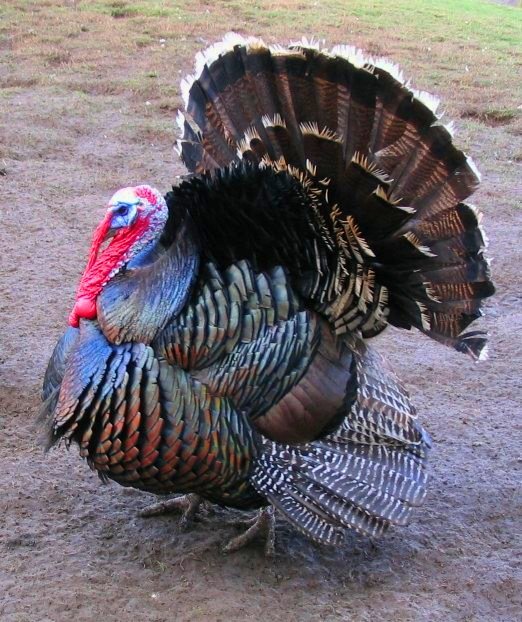
Good for
- Meat: a holiday bird or a freezer’s worth
- Bug and tick control on pasture
- Heritage breeds that can raise their own young
- Curious, friendly personalities
OUTDOOR SPACE
25+ sq ft
per bird
Plus 6–10 sq ft each in the shelter
SIZE
10–40 lbs
Depending on breed and sex
KEEP AT LEAST
2–3 birds
Turkeys are flock birds
LIFESPAN
5–10 years
Heritage breeds; broad-breasted are raised 4–6 months
Best breeds by goal
| Goal | Best fit |
|---|---|
| Meat in one season | Broad Breasted White |
| Heritage meat and breeding | Bourbon Red, Narragansett, Standard Bronze |
| Small spaces and families | Midget White, Royal Palm |
| Ornamental and pest control | Royal Palm |
Breeds to consider
Broad Breasted White
Fast meat bird
The commercial supermarket turkey. Grows very large in 16–20 weeks but can’t breed naturally and can develop leg and heart problems if kept too long. Raise it for one season.
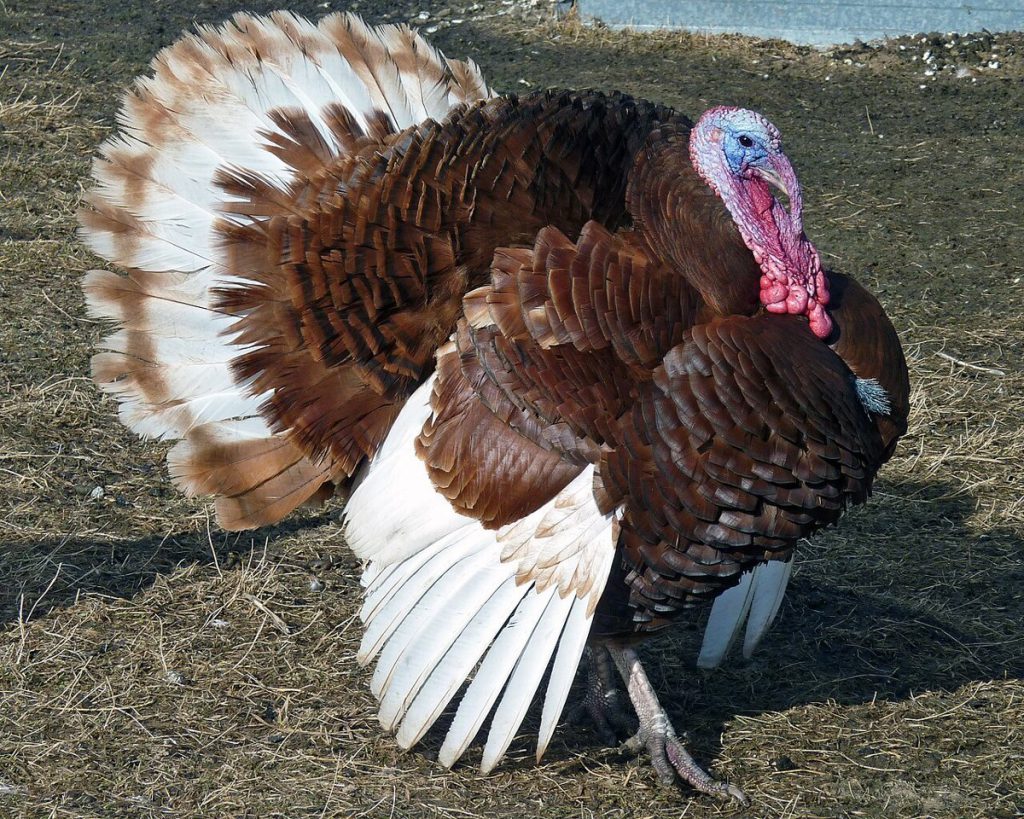
Bourbon Red
Heritage · flavorful
A chestnut-red heritage turkey named for Bourbon County, Kentucky. Good foragers with rich-tasting meat, and they breed naturally.
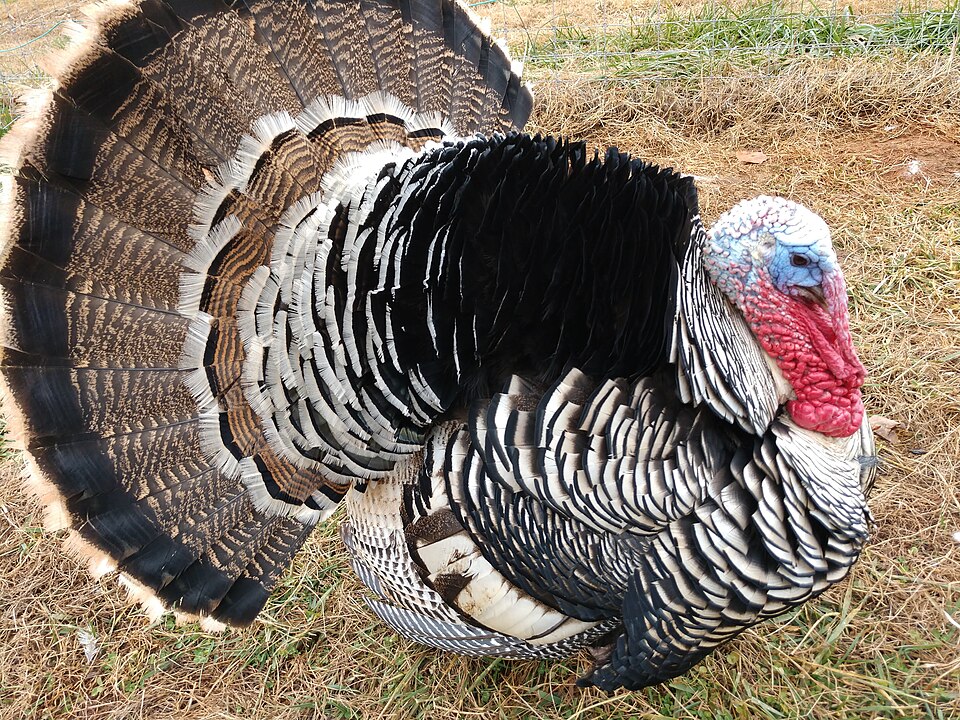
Narragansett
Heritage · calm
A heritage breed from Rhode Island with steel-grey, black and white feathers. Calm, good mothers and good foragers.
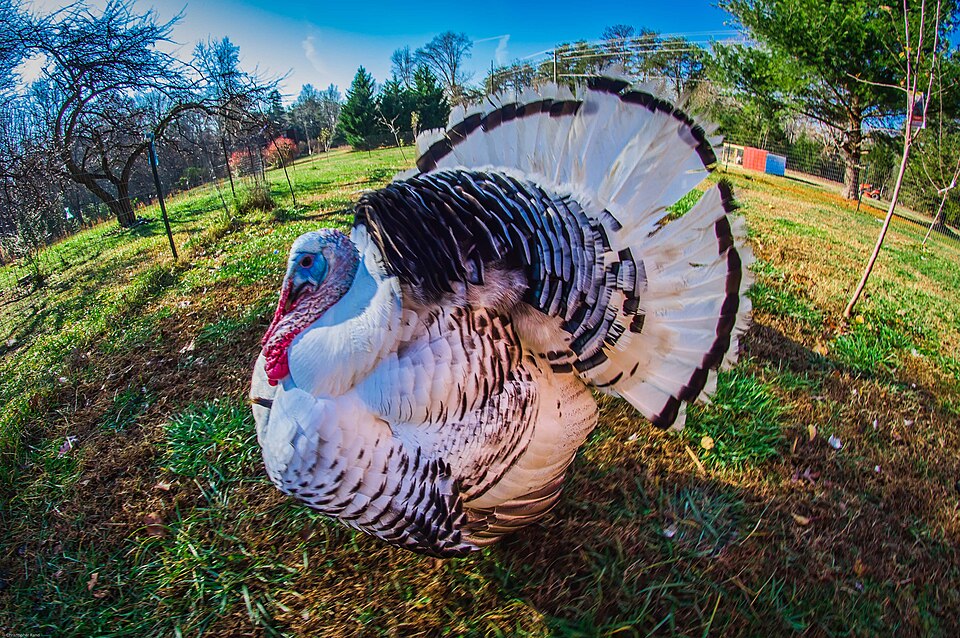
Royal Palm
Small · ornamental
A striking black-and-white heritage turkey kept mostly for looks and pest control. Lighter build than meat breeds and flies well.
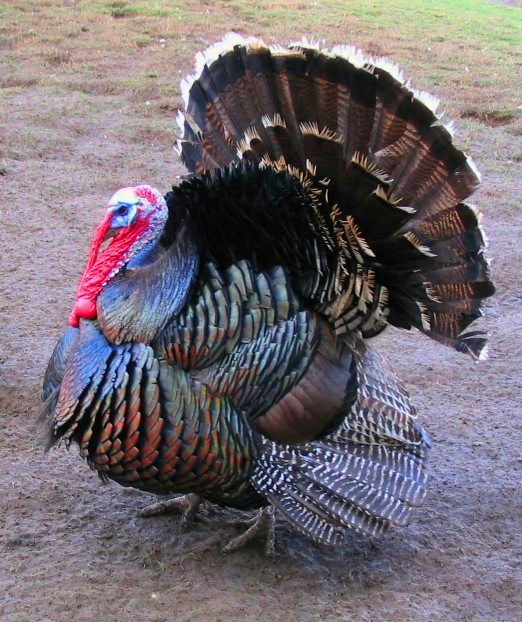
Standard Bronze
Classic heritage
The traditional bronze-feathered American turkey (the heritage type, not the broad-breasted commercial bird). Mates naturally and has good flavor.
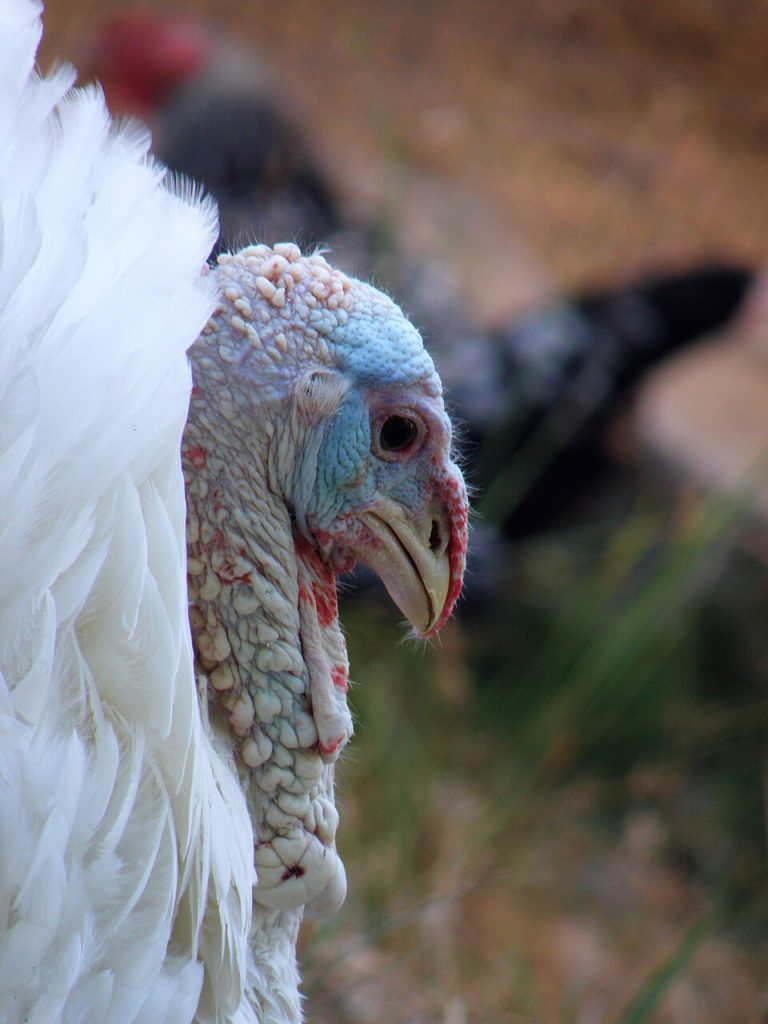
Getting started
1. Check local rules
- Some cities limit poultry numbers or don’t allow male turkeys on small lots. See our Regulations page.
- Plan where the birds will go so they’re not on ground your chickens use.
2. Brooding poults
- Brooder at 95°F, dropping about 5°F a week.
- 28% protein turkey or game bird starter.
- Dip each poult’s beak in water so it learns to drink; marbles in the waterer stop drowning.
- Don’t brood poults with chicks.
3. Housing and roosts
- A dry, draft-free shelter with 6–10 sq ft per bird (more for broad-breasted).
- Low, wide roosts, such as a 2×4 laid flat.
- 25+ sq ft per bird outdoors; cover the run or use a tall fence, since heritage turkeys fly.
4. Keep them apart from chickens
- Chicken cecal worms carry blackhead disease, which often kills turkeys and has no approved treatment.
- Raise turkeys on ground chickens haven’t used for at least a year.
5. Feed and water
- Starter (28%) → grower (20–22%) → finisher or maintenance feed.
- Grit, lots of clean water and shade in summer.
- How much: about 0.5–1 lb of feed a day per adult bird, depending on breed, age and season.
6. Predators
- Coyotes, raccoons, hawks and dogs all take turkeys.
- Lock birds in at night.
7. Processing plan
- Broad-breasted birds are ready at about 16–20 weeks; heritage birds at about 24–28 weeks.
- Book a processor early; fall slots fill up.
Care
Starter kit
The bare-necessities tools and health supplies for each species, not counting fencing, housing or feed. Antibiotics are prescription-only, so line up a livestock vet before you buy animals. Dewormer doses for goats, alpacas and waterfowl are off-label, so get those from your vet.
Every kit
- Digital thermometer
- Nitrile gloves
- Wound spray (Vetericyn Plus or Blu-Kote)
- Gauze, vet wrap, bandage scissors
- Syringes and needles
- Electrolytes
Turkeys kit
- Poultry vitamins + electrolytes
- Corid (amprolium), for coccidiosis
- Blu-Kote, for pecking wounds
- Poultry catch net
- Dog crate, for a hospital pen
Product names are common examples, not endorsements; check current labels before buying, since names and Rx status change.
Care and maintenance schedule
An example schedule for the Pacific Northwest. Treat it as a starting point and adjust it to your animals, your weather and your vet’s advice.
Turkeys follow the chicken schedule with one big difference: keep them off ground chickens use, because chicken cecal worms carry blackhead disease, which has no approved treatment and often kills turkeys.
| When | Tasks |
|---|---|
| Daily | Water, feed, headcount, watch for droopy birds or yellow (sulfur-colored) droppings, which can signal blackhead; lock up at night |
| Weekly | Clean waterers; add or spot-clean bedding; check roosts (turkeys need low, wide roosts) |
| Monthly | Check feet and breast for blisters on heavy breeds; look for mites and lice; check fencing height (heritage breeds fly) |
| Every 6 months | Pooled fecal egg count, focused on cecal worms |
| Yearly | Full shelter clean-out; rest or move turkey ground; review breeding stock for heritage flocks |
Seasonal calendar (Pacific NW)
- Spring: Poults are fragile for 2–3 weeks: 28% protein game bird or turkey starter, brooder at 95°F, and dip beaks in water so they learn to drink. Don’t brood with chicks.
- Summer: Shade and plenty of water; broad-breasted birds overheat easily. Pasture rotation every 1–2 weeks.
- Fall: Processing time for meat birds (broad-breasted about 16–20 weeks, heritage about 24–28 weeks). Avian flu precautions as for chickens.
- Winter: Dry, draft-free shelter with roosts; turkeys handle cold well once feathered.
Deworming
Worms have become resistant to every main dewormer family, so the old advice of deworming on a calendar and rotating brands no longer works. This page explains the current approach and lists dewormer options for each animal on this site. Doses are left out on purpose: many uses are off-label, so your vet sets the dose and the withdrawal time.
Dewormer options
| Product | Status | Small-farm pick |
|---|---|---|
| Fenbendazole | Approved for turkeys only as a feed premix sold to mills; small flocks use a vet-set dose | Best choice, with a vet |
| Piperazine (Wazine) | Roundworms only; labeled for turkeys | Backup |
| Blackhead drugs | None approved in the US | Prevention only |
Recommendation: Prevention beats treatment here. Raise turkeys on ground chickens haven’t used for at least a year, and do a fall fecal test. If cecal worms show up, treat with fenbendazole through your vet to break the blackhead cycle.
Buying guide
How to buy healthy turkeys
A healthy animal from a good seller saves you vet bills and heartache. Print this checklist and take it with you: it covers what to have ready at home, what to ask and check at the farm, and what to do in the first weeks.
Turkey buying checklist
Seller: ______________________ Date: ____________ Animal(s): ______________________
Get ready at home
- Confirm your county and city allow this animal on your lot, and how many (see our Regulations page)
- Housing and fencing are built and ready before the animals arrive
- A livestock vet is lined up (ask about new-client exams and after-hours calls)
- A separate quarantine pen or stall is ready for new arrivals
- Feed, water containers and bedding are on hand for the first week
- Transport is arranged: a crate, trailer or vehicle that is clean and secure
- Your budget covers the animal, supplies, vet visits and feed for the first year
At the farm
- Visit the farm in person and see the animals where they live
- Ask to see the parents or the rest of the herd or flock
- Check that pens and housing look clean and dry
- Watch the animals move, eat and interact before you handle them
- Ask how old the animal is and why it is for sale
- Ask about vaccination, deworming and any diseases in the herd or flock
- Ask for health, breeding and registration records where they exist
- Get a written bill of sale with date, price, age, sex and any health guarantee
- Don’t feel rushed. Walk away if something looks wrong
Check the animal
- Buy poults from a hatchery or breeder that takes part in the National Poultry Improvement Plan (NPIP)
- Choose alert poults that stand, peep and eat; avoid droopy birds or pasted-up vents
- Adults: bright eyes, clean nostrils, quiet breathing and straight legs
- Check the feet and breast of heavy birds for blisters or sores
- Ask whether the flock has had blackhead disease, and whether turkeys share ground with chickens
- Ask whether birds are heritage (they can breed) or broad-breasted (raised for one season of meat)
- Have a brooder at 95°F and 28% protein starter ready for poults
After you bring them home
- Quarantine new animals away from your existing animals for at least 30 days
- Book a vet check or fecal test within the first week or two
- Watch appetite, droppings, breathing and behavior every day at first
- Keep the first days calm, with clean feed and water
General guidance from The Modest Acre. Ask your vet about anything specific to your animals.



Turkey flock record
Fill this in on screen and print it, or print it blank and write on it. What you type is saved only in this browser.
Ready to get started?
Toxic plants
Toxic plants guide for western Washington
Photos of the deadly dozen, plus tables of the toxic trees, shrubs, flowers and weeds that grow around Puget Sound. Learn to recognize them before you turn animals out.
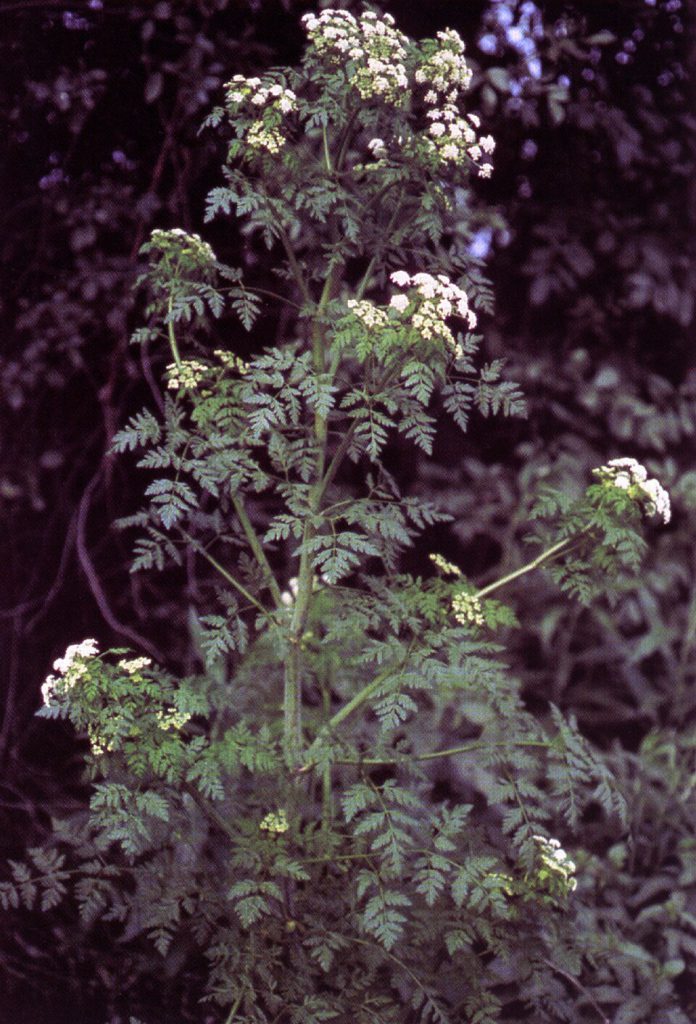

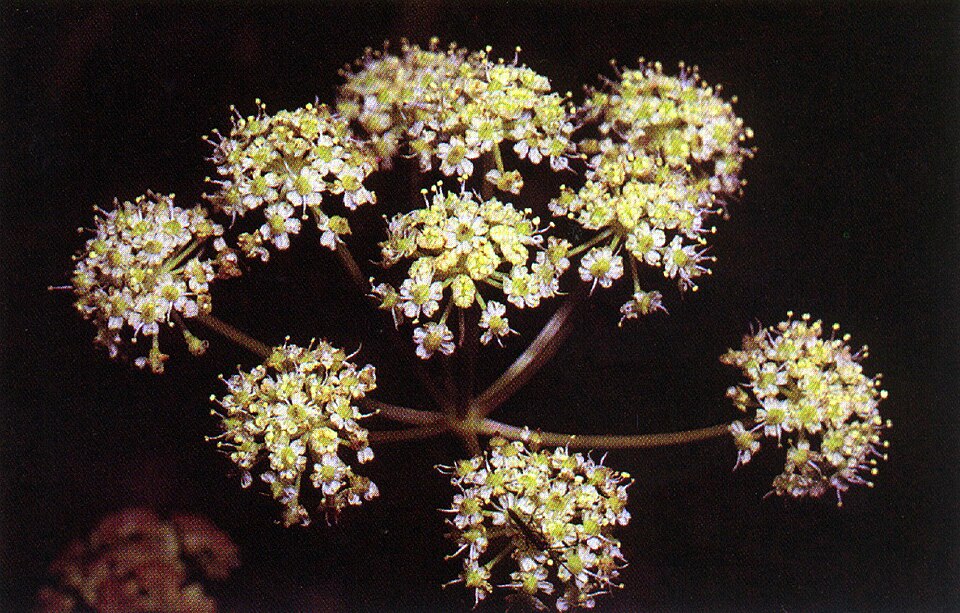

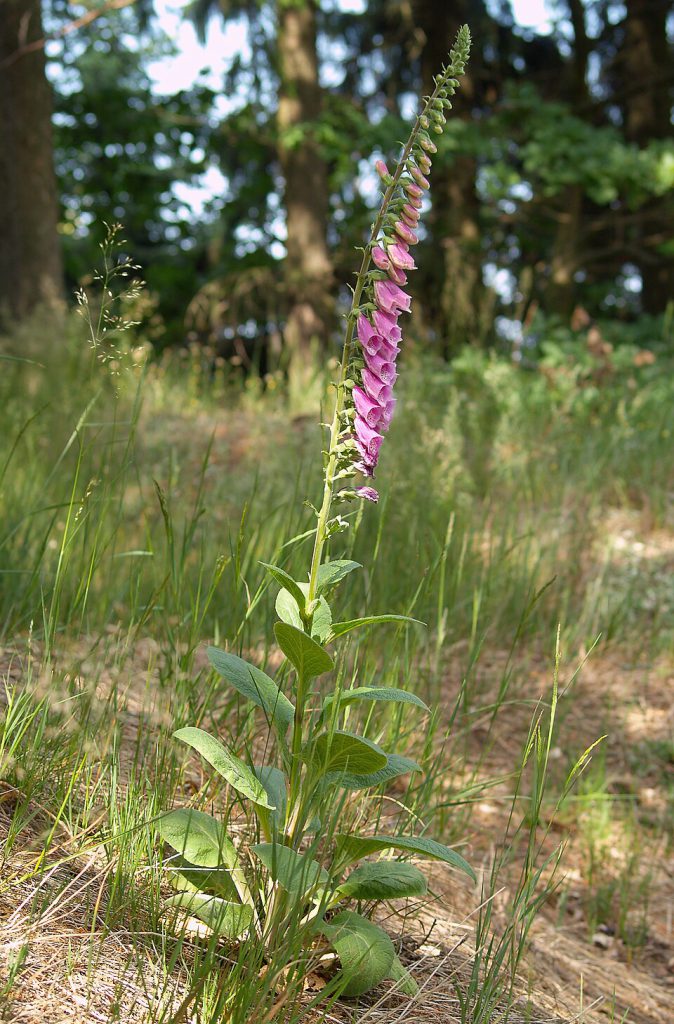

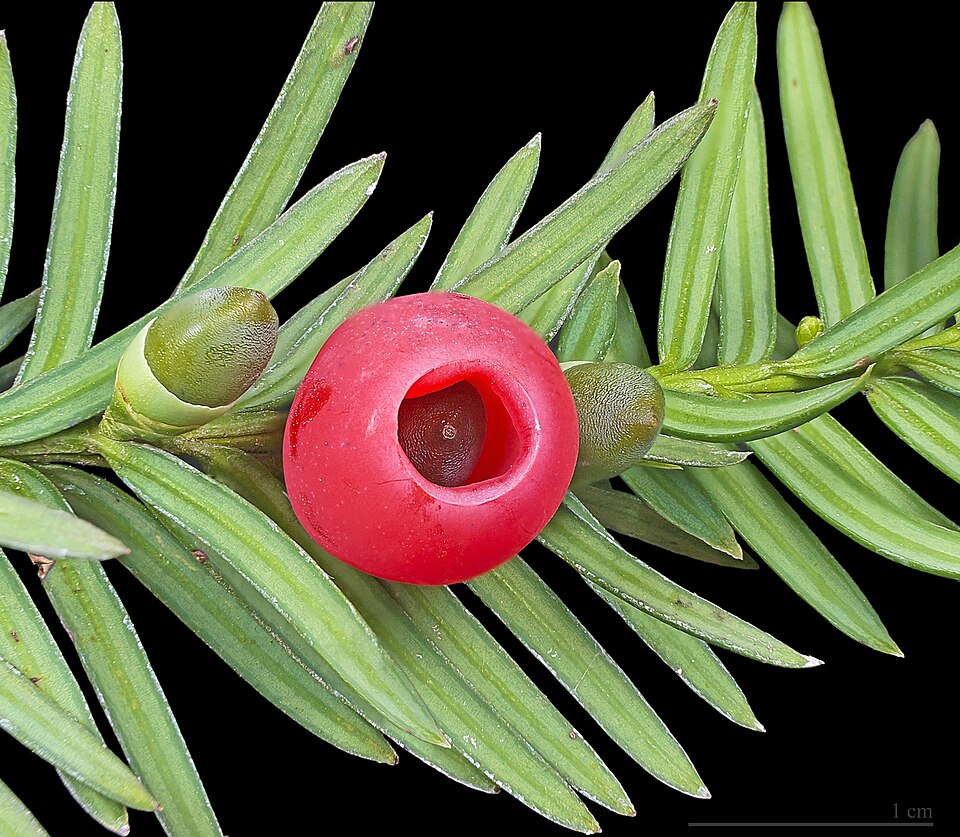

Watch for these on your land
Turkeys
Use the chicken list. Turkeys range farther, so walk fencelines and field edges for hemlock and nightshade before turning them out.
The chicken list
Free-range chickens rarely eat enough of a toxic plant to get sick. Most problems come from scraps or from bored, confined birds.
- Castor bean
- Foxglove
- Yew
- Nightshades
- Green potato peels
- Raw dried beans
- Rhubarb leaves
- Poison and water hemlock
- Death camas
- Daffodil and tulip bulbs
- Heavenly bamboo berries
- Black locust
- Horse chestnut
- St. John’s wort
Keeping your animals safe
- Walk your fencelines every season. Identify plants before pulling them, and check what’s growing just over the fence too.
- Never feed yard clippings. Ask neighbors not to toss trimmings over the fence. A friendly sign helps.
- Clear storm debris fast. Pick up downed maple, cherry and plum branches within a day, before the leaves wilt.
- Keep animals well fed. Hungry animals on bare winter pastures eat plants they would normally avoid. Offer hay when grass runs short.
- Inspect your hay. Look for tansy ragwort, hemlock, horsetail and bracken. Ask your supplier where it was grown.
- Remove poison hemlock safely. Wear gloves, bag the plants and put them in the trash. Never compost them.
- Get free help with ID. The Snohomish, King, Pierce and Thurston county noxious weed boards and WSU Extension offices can identify plants for you.
If you think an animal ate something toxic, call your livestock vet right away and bring a sample or photo of the plant. ASPCA Animal Poison Control is open 24/7 at (888) 426-4435 (a consultation fee may apply).